Overview
As the last event of CEHV's 2025-26 COMPAS Program, a culmination of a yearlong examination into the ethics and politics of food, our speakers will explore the questions around how a democratic society should be organized to best facilitate the implementation of food as a technology. The multidisciplinary researchers will explore questions around how both human and nonhumans interact with food, understand safety and health, and facilitate systems in society to answer these questions.
Panelists
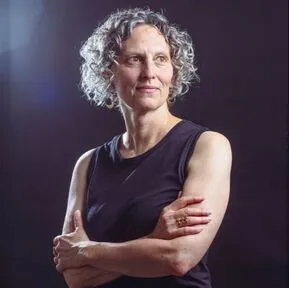
Charlotte Biltekoff (University of California, Davis; Food Science and Technology, American Studies)
Charlotte Biltekoff, PhD, is Professor of American Studies and Food Science & Technology and Darrel Corti Endowed Professor in Food, Wine and Culture at the University of California, Davis, where she builds bridges between scientific and cultural approaches to questions about food and health. Her expertise centers on understanding where ideas about “good” and “bad” food come from and the social and cultural role they play. Recent work explores the political stakes of how experts in the food system understand the role of the public and communicate about science, technology, and innovation. Her research is interdisciplinary, and she frequently collaborates and communicates across disciplinary differences.
Biltekoff’s latest book, Real Food, Real Facts: Processed Food and the Politics of Knowledge, is about how good food became “real” in the beginning of the 21st century and how the food industry has responded to increasingly negative public views of processed food with science-based education and information campaigns designed to “correct” what they see as public misperceptions. Chapters explore competing school curricula seeking to teach students very different versions of “where their food comes from,” the fraught politics of “natural” claims, and the possibilities and limits of “transparency.” Throughout, the book highlights the political importance of how the food industry imagines, or thinks about the public, and how that shapes communication as well as possibilities for meaningful debate and dialogue about what kind of food system we want.
Biltekoff is also author of Eating Right in America: The Cultural Politics of Food and Health (Duke University Press, 2013). She was a co-PI on the NSF-funded UC AFTeR Project, a multidisciplinary research project across 3 UC campuses examining the Bay Area Agri-Food Tech sector. She has published articles in a wide range of academic journals and enjoys doing podcasts and other interviews.
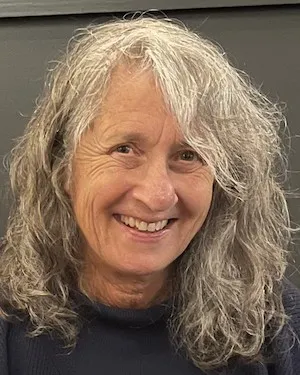
Julie Guthman (University of California, Santa Cruz; Sociology)
A geographer by training (UC Berkeley PhD), Julie Guthman is a distinguished professor of sociology emerita at the University of California, Santa Cruz (UCSC). Over her career she has conducted multiple research projects examining how racial capitalism and its cultural manifestations have shaped the conditions of possibility for transforming food production and consumption. Most recently, she was the principal investigator of the UC-AFTeR Project, a multi-campus collaboration that investigated Silicon Valley’s forays into food and agriculture. Her most recent book, The Problem with Solutions: Why Silicon Valley Can’t Hack the Future of Food (2024) draws on that research, as well as two decades of teaching in the Community Studies program at UCSC.
Guthman's post-retirement commitments include serving on the board of Mesa Refuge, a writers' retreat focused on social justice, environmental justice and economic equity, and continuing to co-edit the University of California Press Critical Environments series. Her prior publications include three multi-award winning monographs: Agrarian Dreams: the Paradox of Organic Farming in California (2004, 2nd ed. 2014), Weighing In: Obesity, Food Justice, and the Limits of Capitalism (2011), and Wilted: Pathogens, Chemicals, and the Fragile Future of the Strawberry Industry (2019), which won the Meridian Award of the American Association of Geographers (AAG). She has also published an edited collection and over seventy articles in peer-reviewed journals. Her research and writing has been supported by the National Science Foundation, the USDA, the John Simon Guggenheim Foundation, the Radcliffe Institute for Advanced Study, and the Rockefeller Foundation Bellagio Center. She has received an Excellence in Research Award from the Agriculture, Food and Human Values Society, the Martin M. Chemers Award for Outstanding Research from the Social Sciences Division at UC Santa Cruz, and the Distinguished Career Award from the Cultural and Political Specialty Group of the AAG.
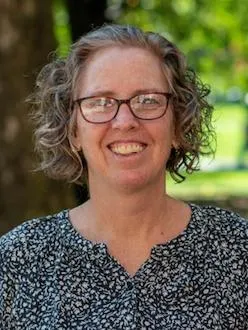
Becky Mansfield (Ohio State; Geography)
Professor Becky Mansfield is Professor and Director of Graduate Studies in the Department of Geography. Her research lies in the areas of nature-society geography, political ecology, and science studies. Broadly interested in the recursive relationship between power and nature, Professor Mansfield studies diverse bodily and planetary socionatures. She is particularly interested in how traditional ideas about a separation between humans and nature seem to be giving way to new, non-dualist, fluid understandings of nature-society dynamics that undermine any notion of foundational separations. Yet a central focus of her work is how these non-dualist nature-society relationships do not erase but transform and unleash new power dynamics. This raises key questions about who (both human and non-human) will benefit and who will be harmed, and in what ways. Questions about race, gender, and reproduction are central to these new power dynamics and problems of injustice. Building on these interests, Professor Mansfield also brings feminist and anti-racist perspective to bear on academia.
Much of Professor Mansfield's recent work focuses on chemical geographies as exemplar and mechanism of human-nature entanglement. She recently completed projects on the biopolitics of epigenetics and on deregulatory science at the US Environmental Protection Agency. She is currently engaged in a collaborative project the global pesticide complex, addressing industry, regulation, and contested knowledges of toxicity and harm. Another ongoing collaborative project is on the role of ideas about nature in limiting racial diversity in environmental sciences.
Moderation: Naomi Scheinerman (Ohio State; Bioethics)
Naomi Scheinerman is an Assistant Professor of Bioethics in the Department of Biomedical Education and Anatomy. Her background is in political and democratic theory, with experience in law, public policy, and philosophy. In addition to deliberative democracy, she works on exploitation and consent, including on such topics as prenatal genetic testing, gestational surrogacy, reproductive rights, paid participation for clinical trials, egg and organ donation, and newborn screening. Prior to joining the faculty at OSU, she was a Postdoctoral Fellow in Genetics and Genomics at the University of Pennsylvania in the Department of Medical Ethics and Healthcare Policy and the AI Joint Fellow-in-Residents at Harvard’s EJS Center for Ethics and Berkman Klein Center for Internet and Society. She also worked for two years as a research assistant at The Hastings Center.
Accommodations
To ask questions about accessibility or request accommodations, please contact CEHV Associate Director Aaron Yarmel (yarmel.2@osu.edu). At least two weeks' advance notice will help us to provide seamless access.