Civil disobedience is widely viewed as an important form of expression for democratic citizens. Moreover, it's often thought to be more socially acceptable and effective than other ways of protesting. But are there circumstances under which uncivil forms of disobedience are morally permissible or even required? Are activists ever justified in using uncivil tactics when civil options are available? How much should we weigh popular support over other considerations?
Join the Center for Ethics and Human Values in a student-moderated discussion featuring two guest speakers presenting different viewpoints on these issues.
This student-moderated discussion is part of CEHV's "Civil Discourse Forums" series. Forum topics are selected by our undergraduate Civil Discourse Fellows trained in the 4Cs of civil discourse (Be Curious, Be Charitable, Be Conscientious, Be Constructive).
CEHV's Civil Discourse for Citizenship initiative is pursued with generous support from the Derrow Family Foundation and in partnership with Ohio State's Civil Discourse Project.
Speakers

Dr. Candice Delmas
Dr. Delmas is an Associate Professor of Philosophy and Political Science at Northeastern University. She works in moral, social, political, and legal philosophy, with a special focus on the ethics of civil and uncivil disobedience. In 2018, Delmas published a book with Oxford University Press called A Duty to Resist: When Disobedience Should Be Uncivil. She is currently co-editing a volume on The Ethics of Uncivil Protest and Resistance and has a forthcoming book on Civil and Uncivil Disobedience. Her current research project is on the ethics of resisting criminal (in)justice in the street, courtroom, and prison.
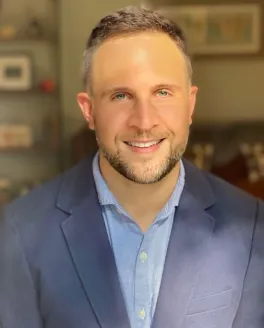
Dr. Evan Perkoski
Dr. Perkoski is an Associate Professor of Political Science at the University of Connecticut. He studies issues relating to terrorism, insurgency, and violent and nonviolent uprisings. In his book, Divided Not Conquered: How Rebels Fracture and Splinters Behave, Perkoski explores the fragmentation of militant organizations (like Al Qaeda) and the conduct and survivability of breakaway splinter groups (like the Islamic State). Some of his other work looks at the onset of mass killings in popular uprisings, the logic of covert and clandestine cyber operations, and how cooperation and competition influence the behavior of militant groups. He has also written on nonviolent resistance and uprisings.
Moderators

Reed Bushbaum
Reed is a senior majoring in Philosophy, Politics, and Economics with minors in Legal Foundations of Society and International Relations - Diplomacy. He currently serves as the Communications Assistant for the University Senate and as the Interdisciplinary Programs and Faculty Senate Representative on the Arts and Sciences Student Council. On campus, Reed is an active member of the PPE Society, a competitor on the Ethics Bowl Team, a Student Experience and Engagement Delegate, and a writer for the Undergraduate Law Review. He also works as a political methodology research assistant, focusing on U.S. Supreme Court decision-making. Reed is passionate about the philosophy of law and ethics, diplomacy, and civil discourse, and he hopes to pursue a career in international dispute resolution after earning his J.D.

Julian Yetsky
Julian is a second-year student majoring in Public Management, Leadership and Policy with a minor in Political Science on the Pre-Law track. He serves as the Secretary of the OSU chapter of the American Enterprise Institute. Julian is an active member of the Law & Society Scholars program where he serves on its Leadership Council as a member of the Buckeye Affinity and Professional Development Committee. Outside of his academics and extracurriculars, Julian works as a Student Steward over at Traditions at Kennedy. In his spare time, Julian likes to speak German, hang out with friends and be of service to others whenever possible.
